“Sound is the medicine of the future.”
—Jonathan Goldman
Explore the powerful healing of frequency
Frequency is how we are organized at a fundamental level. Everything in the known universe carries vibration. Sound and vibration are among the first sensory experiences to organize the nervous system and often remain accessible even at the end of life. Long before we understand language, the body responds to rhythm, tone, pattern, and vibration.
We experience this every day…when a piece of music shifts our mood, when a familiar voice feels grounding, or when noise leaves us feeling tense and overstimulated.
Within each of us exists a natural tuning. Yet the modern world is loud, dense, and demanding, and over time it’s easy to drift away from that internal rhythm which can leave us out of balance, dysregulated, navigating long term health challenges, or simply feeling “out of tune”.
Many of us live in a constant state of mental activity and alertness. Sound therapy offers an opportunity to support the nervous system, often inviting in a shift from active thinking into deeper states of rest and relaxation. In these quieter states, the body may release tension more easily, the mind can soften, and a sense of internal spaciousness becomes available. With repeated access to these states, the nervous system can begin to recognize them as familiar. Over time, this sense of calm and regulation may become more accessible beyond the session itself — something the body remembers how to return to.
While sound and frequency have been recognized as powerful organizing forces since ancient times, many of the ways sound therapy is applied today are modern and continually evolving. Contemporary sound therapy draws from current research in neuroscience, biofield research, and nervous system regulation, using structured, intentional techniques informed by both tradition, practitioner intuition, and evidence-based understanding.
Professional Background
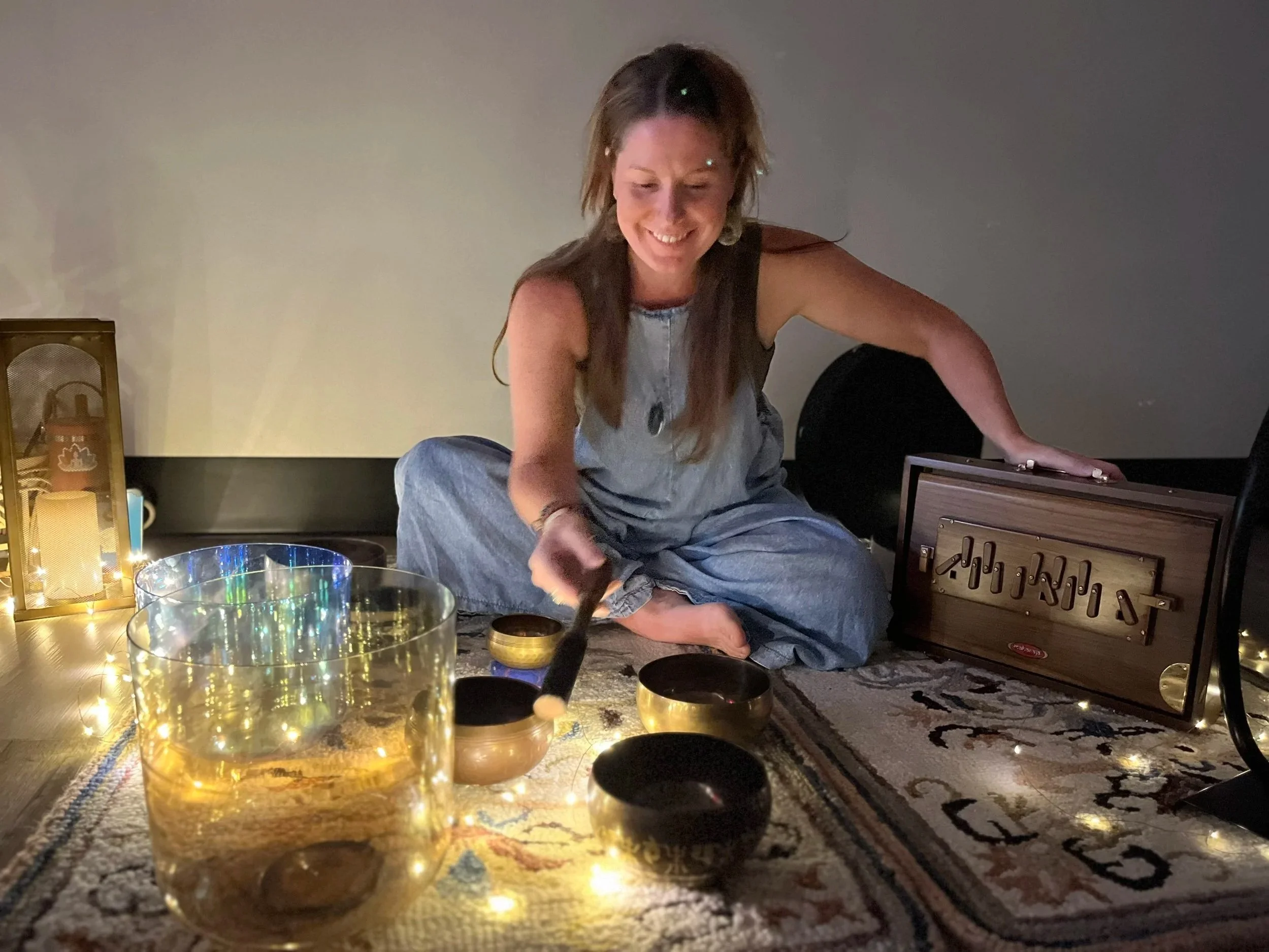
My sound therapy work is grounded in person-centered care and informed by over 20 years of professional experience supporting individuals in social service and care-based settings. This background shapes how I hold space which prioritizes safety, consent, nervous system awareness, and respect for each individual’s lived experience.
I am a 500-hour trained yoga teacher. I also hold an Integral Sound Therapy diploma, with over 200 hours of formal study and applied case work and studied under Natalie Brown-Sound Healing Academy Lead Trainer in the Americas. I am also a member of the International Sound Therapy Association.
My sound training emphasizes structured assessment, intentional protocol selection, and discernment in application, moving beyond intuitive use of sound alone. This work honors both what is measurable and what is experienced, allowing sound to be applied with care, humility, and respect for the individual.
Sessions are guided with care and responsiveness, integrating sound, stillness, and regulation-based frameworks to support rest, integration, and balance. My intention is to offer sound therapy in a way that is grounded, ethical, and supportive—meeting each person where they are on the day they arrive.
Client Reflections
What to expect
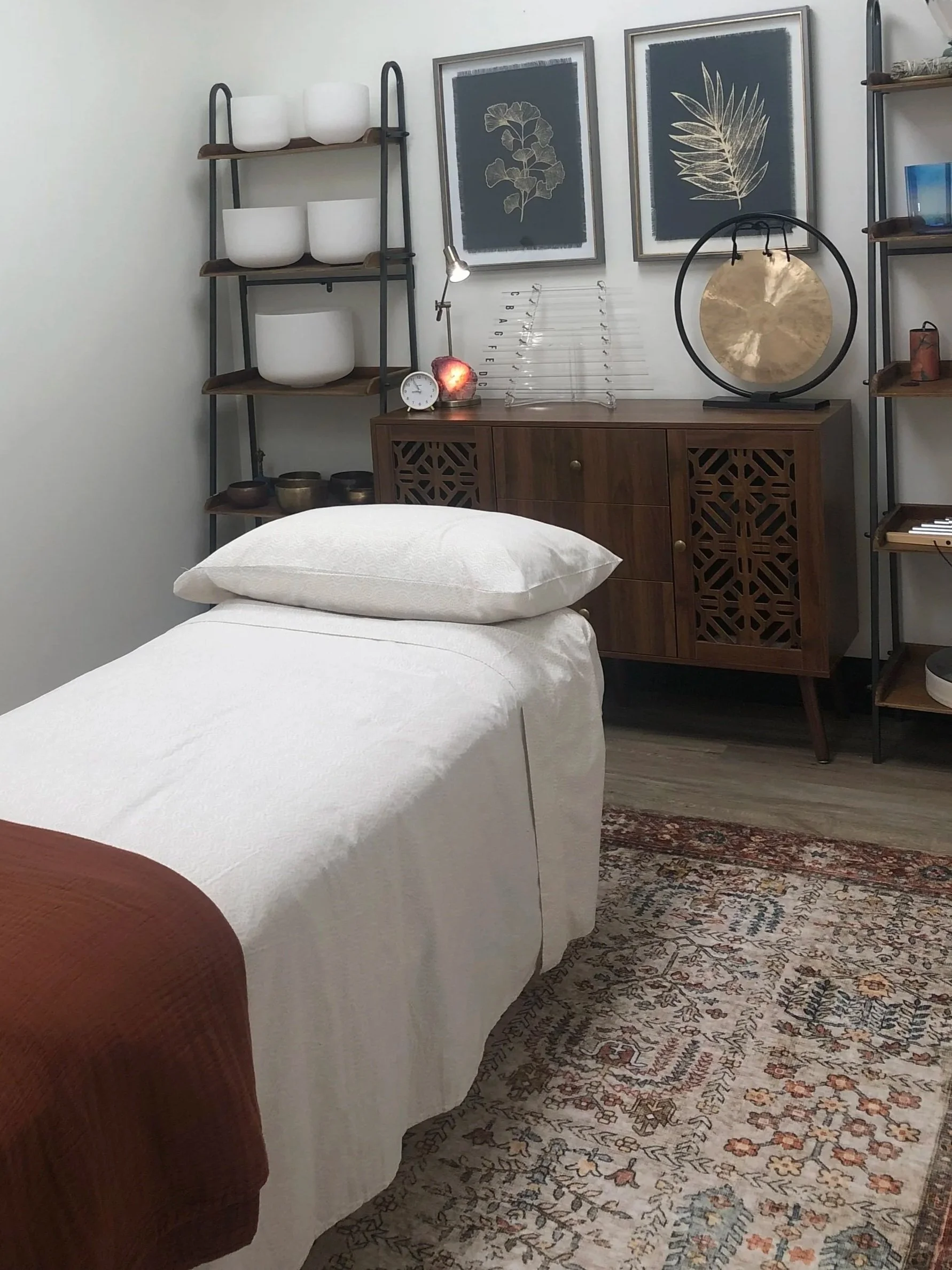
Sessions are tailored to your comfort and needs; nothing is required of you but to arrive as you are. Sound therapy sessions take place in a private, softly lit room designed to support rest, comfort, and nervous system regulation. The space is intentionally calm and minimally stimulating, allowing you to settle in and relax fully.
Session Structure & Timing & Pricing
Sessions are 60–90 minutes, depending on the service selected. This time includes arrival, settling in, the sound experience itself, and a few minutes at the end for gentle integration before returning to your day.
Relaxation Sessions-60 min $85. These sessions focus on rest and nervous system calming and do not require a consultation. These sessions may include guided meditation and breathwork alongside sound.
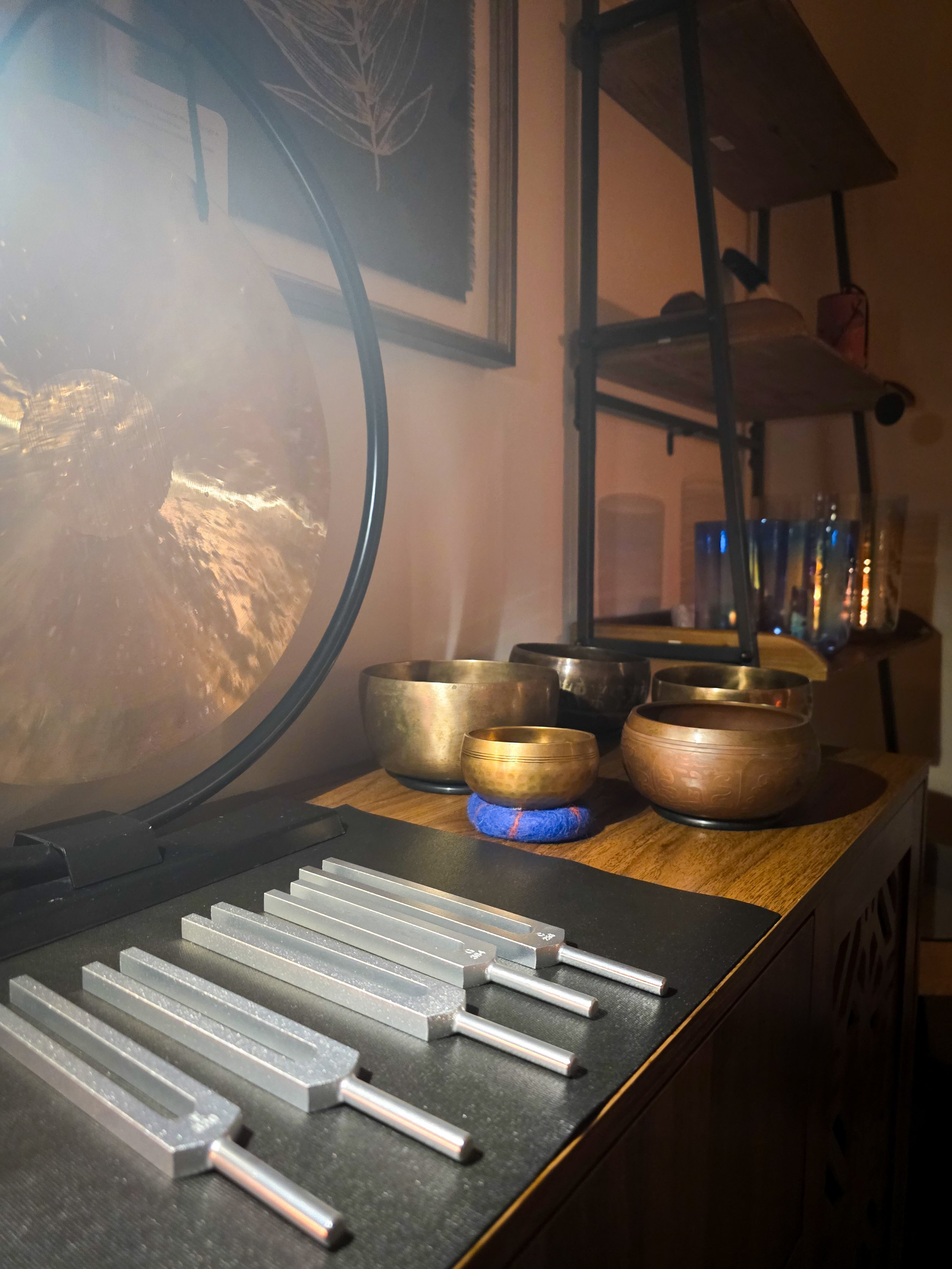
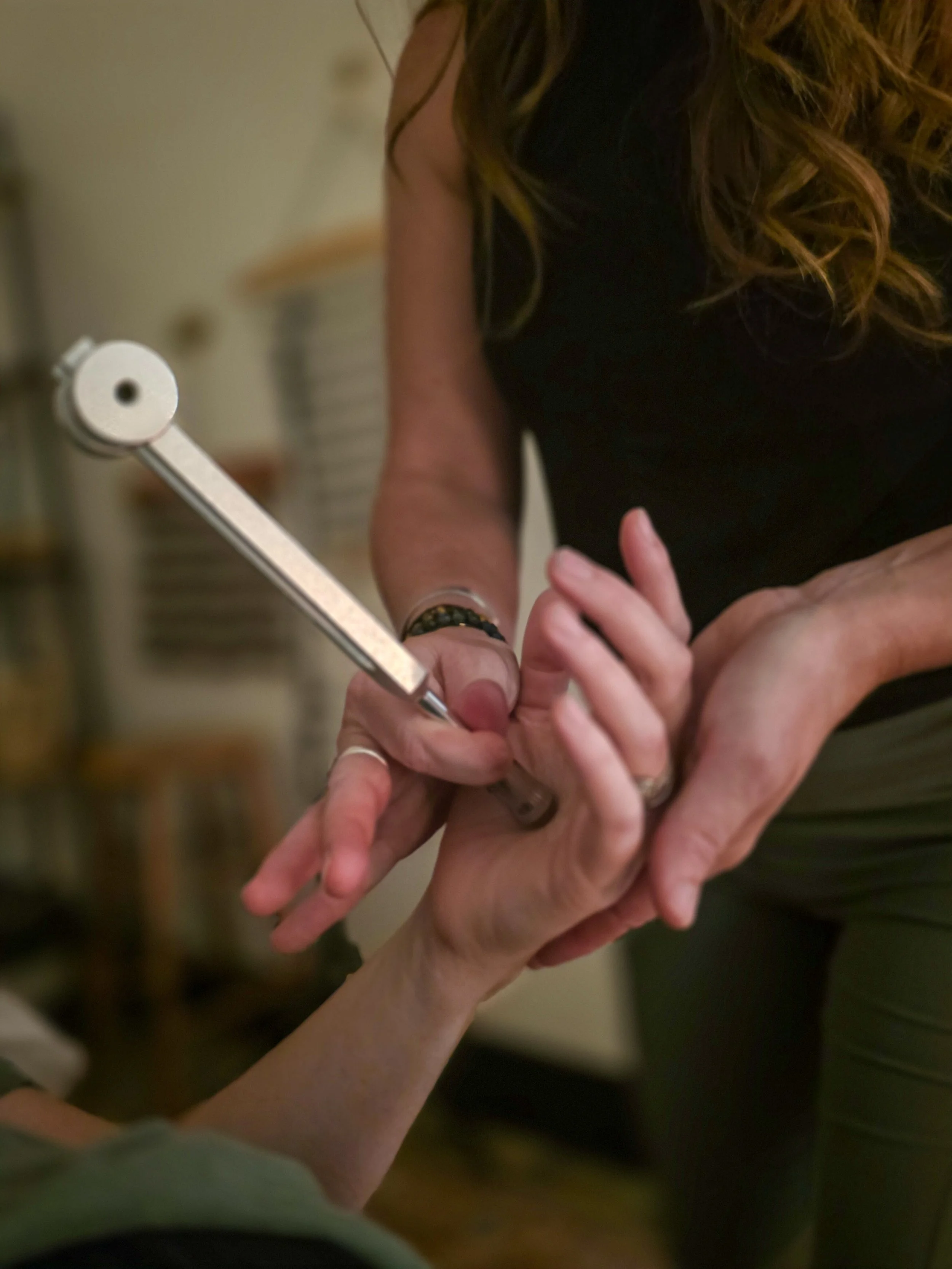
Therapeutic Sound Therapy Sessions-90 Min $135. These sessions include a deeper check-in and may incorporate specific sound therapy protocols, including the use of tuning forks and bowls applied near or on the body, based on your comfort and the session focus.
Comfort & Support
You will remain fully clothed and rest comfortably throughout the session. Props are available to support relaxation, including blankets, bolsters, eye pillows, heating pads, and weighted sandbags. You’re encouraged to adjust your setup so your body feels as supported as possible.
At times, essential oils or incense may be used to enhance the experience. If you have sensitivities or prefer to avoid these, please note this when booking or reach out in advance.
The Space
Sessions are held within a shared wellness environment. While the room itself is quiet and private, occasional ambient sounds may be present when nearby classes begin or end. These background sounds are minimal and should not interfere with the effectiveness of the session.
The room is thoughtfully decorated and designed to feel warm, grounded, and welcoming—supporting a sense of ease from the moment you arrive.
Your questions Answered
-
No. Sound therapy sessions are accessible to beginners and experienced practitioners alike. You don’t need to know or do anything in advance — simply arrive as you are.
-
Relaxation sessions are designed to support deep rest and nervous system settling. These sessions focus on guided breathwork, meditation, and immersive sound, and do not include consultation or protocol-based sound application.
Therapeutic Sound Therapy sessions include a more in-depth intake and consultation. These sessions use structured, intentional sound protocols — which may include on-the-body application of weighted tuning forks and bowls— selected based on individual needs, history, and responses on the day of the session.
If you’re unsure which option is best for you, starting with a Relaxation session is often a good choice, and you’re welcome to reach out with questions before booking.
-
If you’re primarily looking for rest, stress relief, or a calming experience, the Relaxation session is a great place to start. These sessions are designed to support deep relaxation and nervous system settling, without consultation or on-body sound work.
If you’re interested in a more individualized experience that includes intake, assessment, and the possible use of structured sound protocols, the Therapeutic Sound Therapy session may be a better fit.
If you’re unsure, many people begin with a Relaxation session and decide from there. You’re also welcome to reach out with questions — I’m happy to help you choose what feels most appropriate.
-
Yes. All clients receive an intake form prior to their session. This form helps identify contraindications, sound sensitivities, and any relevant health considerations to ensure each session is supportive and appropriate.
Therapeutic Sound Therapy sessions involve a more detailed intake and consultation process to help guide session focus and protocol selection. Clients who select this service will receive a separate consultation form via email prior to their first appointment.
If any required forms are not completed in advance, time will be reserved at the beginning of the session to complete them.
-
In Therapeutic Sound Therapy sessions, certain protocols may involve gentle repositioning, such as moving from lying on your back to lying on your belly. There may also be brief, responsive communication between you and the practitioner to check in on sensations or responses as the session unfolds. All participation is person-centered, optional, and guided collaboratively based on comfort and need in the moment.
In Relaxation sessions, no movement or active participation is required. Sessions are primarily receptive and restorative. Some people drift into sleep, and that is completely fine — sound can still be supportive even during rest.
-
Certain conditions may require modification or may limit the types of sound application that are appropriate. These include pregnancy, a history of seizures, implanted medical devices, recent injury, or significant sound sensitivities.
All clients complete an intake form prior to their session. Please note any concerns there or reach out with questions before booking.
-
No. Sound therapy is not a replacement for medical care, psychotherapy, or trauma-specific mental health treatment.
However, many people find sound therapy supportive when working with stress, overwhelm, or trauma because it does not rely on storytelling, analysis, or verbal processing. Sound works through the body and nervous system, offering an opportunity to step out of the thinking mind and into direct sensory experience.
In therapeutic sound work, the intention is often to help the body orient toward a different internal state or “frequency” — such as calm, safety, grounding, or coherence — rather than repeatedly activating states of tension, fear, or vigilance. Instead of focusing on what has happened, sound can support the body in sensing what is possible in the present moment.
For some people, this feels like a relief: a way to experience regulation and rest without needing to revisit or relive personal history. Sound therapy can be a supportive complement alongside other forms of care, helping the nervous system recognize and resonate with states beyond worry, stress, or hyper-alertness.
-
You will get several emails from Square confirming your appointment. You can easily cancel or reschedule your appointment from the link included in these emails.
After booking, you’ll receive several confirmation emails from Square with your appointment details. These emails include links that allow you to easily cancel or reschedule if needed.
You will also receive a separate email from me prior to your session with links to the preparation forms specific to your appointment. These forms are only required once.
Book a Session.
Let’s talk!
If you still have questions about whether sound therapy is right for you, you’re welcome to reach out. I’m happy to answer questions and typically respond within 48 hours.